Music & AI: New Tools, Deeper Creativity
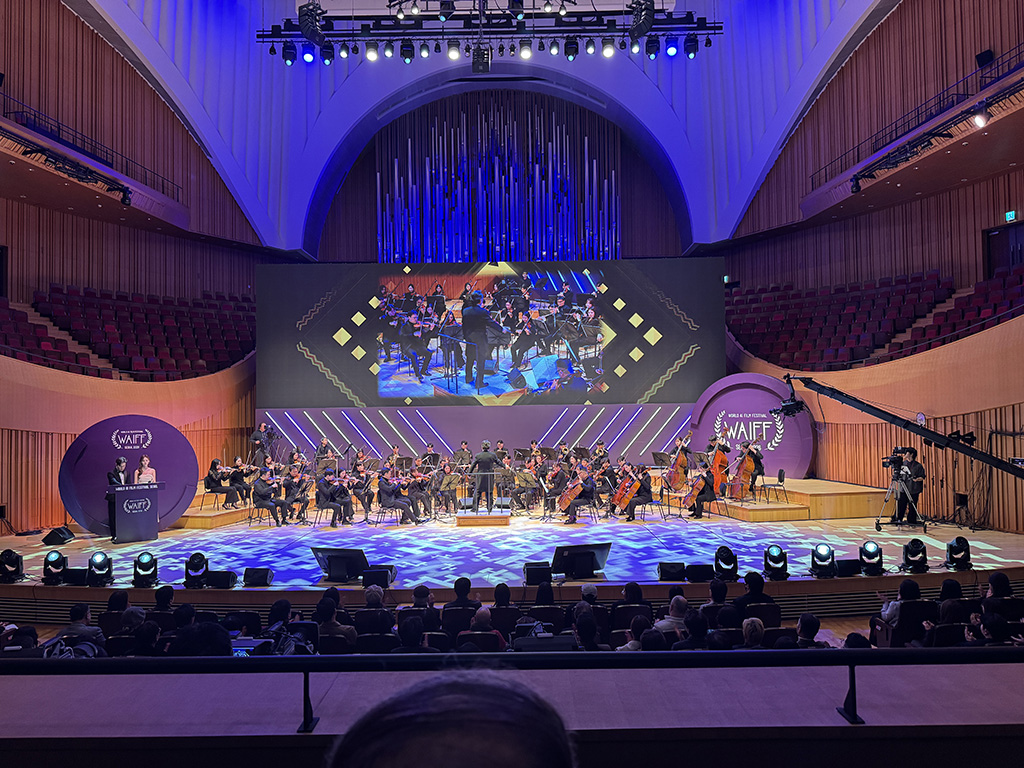
Music has long been one of humanity’s deepest forms of expression, an art that shapes memory, emotion, and shared identity. From the mythic resonance of Orpheus’s lyre to the living energy of modern ensembles, it has evolved through a constant dialogue between imagination and craft. With the rise of artificial intelligence, the boundaries of creation are shifting and a question emerges with renewed intensity: Creating, does it mean producing something new, or organizing differently what already exists?
Through machine learning, AI systems can analyze vast musical corpora, generate compositions, emulate styles, and personalize listening experiences with unprecedented precision. These capabilities transform not only how music is produced, but also how it is distributed, consumed and received. Composition becomes partially algorithmic; performance can be augmented or simulated; creativity itself is reframed as an interaction between human intention and computational inference.
Between fascination and concern, artificial intelligence seems capable of imitating, composing, and even surprising. But rather than replacing the artist, it profoundly transforms the tools of creativity. It shifts the gesture, redefines intention, and opens a new field of collaboration between human and machine.
For centuries, music has evolved alongside the tools that shape it. From the quality of early instruments to the precision of digital systems, each innovation has widened the scope of creation. Today, artificial intelligence marks a new stage in this continuum. With unprecedented speed and flexibility, AI can now generate complete musical pieces—melody, harmony, lyrics, and instrumentation— within seconds. This shift is not merely technical, it is philosophical. It challenges our understanding of authorship, creativity, and even what it means for music to feel “human.”
But AI does not create in a vacuum. It learns from vast datasets of existing music, absorbing patterns, styles, and structures. In doing so, it becomes less an autonomous artist than a mirror and amplifier of human culture. The question, then, is not whether AI can replace musicians, but how it can collaborate with them.
Rhythm: The First Territory of Convergence
Among the components of music, rhythm appears as a privileged meeting ground between humans and machines.
Unlike melody or timbre, rhythm is highly structured, stable, and reproducible, making it particularly suited to algorithmic imitation and percussion becoming an ideal field for experimentation. From traditional drumming to electronic performances, machines have demonstrated remarkable precision in replicating rhythmic patterns.
Advances in artificial intelligence have amplified this dialogue. Machines now replicate intricate rhythmic patterns with extraordinary accuracy, mastering not only tempo but also nuance through musical analysis. They generate sequences that adapt, evolve, and sometimes surprise, extending beyond imitation into creative proposition.
Within this environment, the drum player occupies a pivotal role. As the temporal anchor of an ensemble, he regulates flow, guides transitions and shapes the dynamic architecture of sound. Through micro timing, variations, accents, and phrasing, he infuses rhythm with tension and release, determining what musicians call “groove”, the subtle cohesion that binds performance into a unified whole. Besides, rhythm is not only a mechanism, it is also a bodily experience. It connects calculation to sensation, and repetition to emotion.
Percussion in the Orchestra: Structure and Tension
Unlike a band drummer, orchestral percussionists do not drive the ensemble’s timing. That role belongs to the conductor. Their parts are fully notated, leaving little room for improvisation. Silence is as important as sound. Percussion becomes architectural rather than constant, a force that punctuates and transforms rather than continuously propels As orchestras begin to integrate digital technologies, a new form of hybrid performance emerges, where human musicians and intelligent systems interact dynamically. Systems capable of flawless regularity and immense speed engage with human performers, not as replacements but as counterparts. The exchange between organic variability and algorithmic precision opens a space where rhythm becomes a shared language, continuously redefined at the frontier of human and machine collaboration.
2026 Exclusive at WAIFF in Cannes: “Symphony of A.I. & Human”
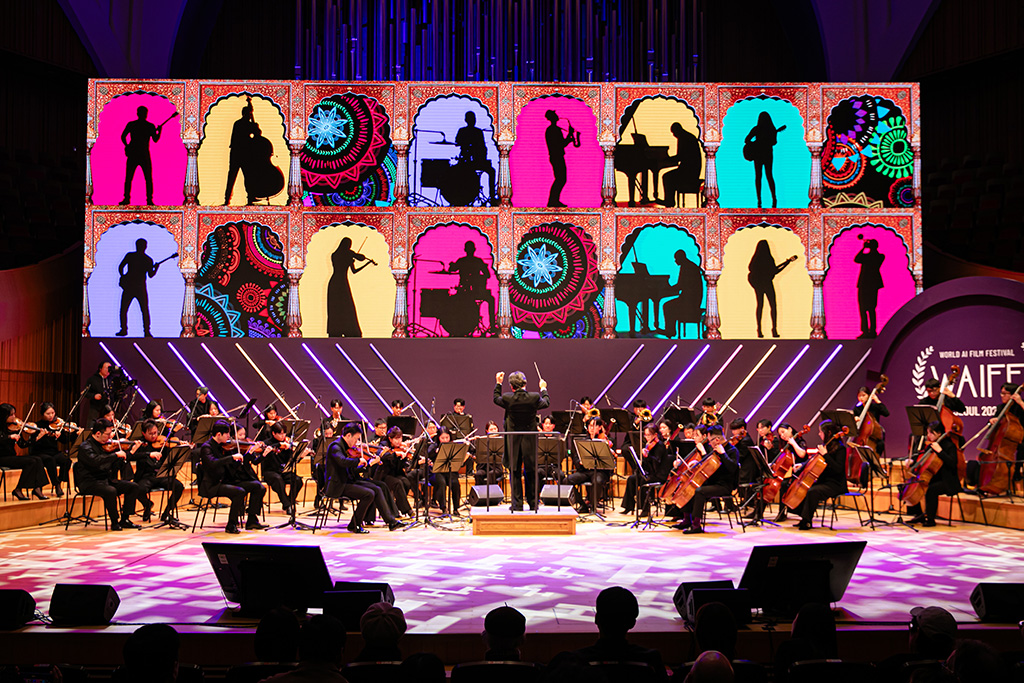
Toward the Orchestra of the Future
Integrating artificial intelligence into live performance marks a significant artistic evolution, giving rise to hybrid orchestras that combine generative systems, augmented instruments, and interactive technologies.
“Symphony of A.I. & Human” explores the evolving relationship between artificial intelligence and human creativity. Built around “Lost but Won” by Hans Zimmer (from the Rush soundtrack), the piece unfolds as an emotional journey through tension, struggle, and achievement. In this context, percussion becomes a particularly rich field for experimentation.
At the World AI Film Festival, the concert is performed by the Seocho Philharmonia Orchestra and the ARKO Ensemble, under the direction of the Korean American conductor Jong Hoon Bae[1] “Symphony of A.I. & Human” designs a dynamic dialogue between precision and emotion, algorithm and sensitivity.
Through rigorous experimentation with emerging tools such as Suno and ACE, in collaboration with AI musician Mr. Park, the project explores both the capabilities and current limits of AI-generated music.
While AI can produce a wide variety of sounds, genres, and styles, it still lacks the complexity required to build fully developed musical structures. Bridging this gap remains a central creative challenge.
To ensure both artistic quality and reliability in performance, AI systems are pre-trained on core sound models and refined during rehearsals. Although real-time score generation is a future goal, human direction remains essential to preserve coherence, emotion, and artistic intent.
Rehearsals have revealed both the promise and unpredictability of this collaboration. AI’s occasional misalignments or unexpected responses introduce a form of spontaneity akin to human imperfection, though often more challenging to correct in real time. These moments underscore the evolving nature of human, AI interaction and highlight the importance of adaptability and continued refinement.
2026 Exclusive at WAIFF in Cannes: Claude Lelouch and the Boléro
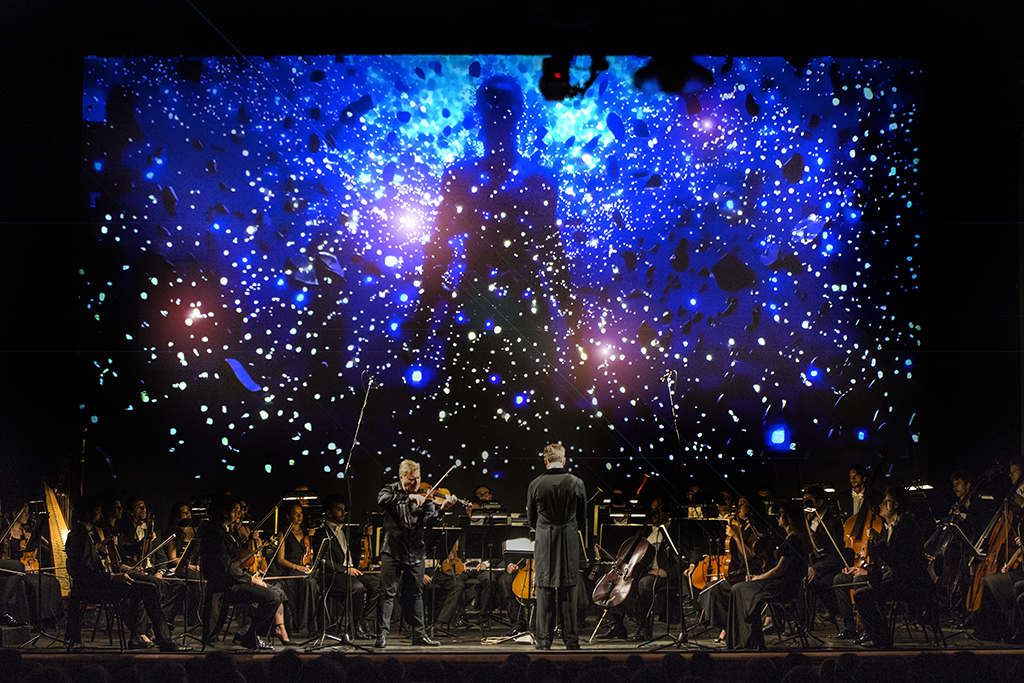
Maurice Ravel and the Boléro: Music before the Algorithm
Long before the rise of computers, Ravel composed a piece built on repetition, incremental variation, and a steady crescendo.
Rather than telling a narrative, the structure of Boléro mirrors a computational loop: a fixed pattern repeated with evolving orchestration. This makes the work appear almost like a precursor to algorithmic thinking in music, positioning Ravel as an unexpected pioneer of a logic that would later define digital creation.
Boléro is not just a piece of music: it is a sonic meditation on the human condition.
Claude Lelouch and the Boléro: A life in Cinematic Resonance
In a gesture of unique cinematic reflexivity, the orchestral performance of Boléro accompanying excerpts from the films of Claude Lelouch elevates the retrospective into a living, breathing experience
Under the direction of Jong Hoon Bae, the Seocho Philharmonia Orchestra & ARKO Ensemble perform Boléro live on stage as a tribute to “the best storytelling of French cinema”, while selections from his movies are projected simultaneously.
This staging creates a precise dialogue between sound and image. The steady rhythm and gradual crescendo of Boléro accompany the unfolding of Lelouch’s cinematic journey, allowing each sequence to resonate within a continuous musical flow. The live performance reinforces the emotional impact of the images, transforming the retrospective into an immersive experience.
As the orchestra sustains the steady, almost ritualistic pulse of Boléro, each cinematic fragment appears not as a fixed memory, but as something reactivated, revived through sound. The famous crescendo parallels the emotional intensification of the montage, turning the retrospective into a dynamic act of remembrance.
Far from a simple tribute, this staging reveals the profound coherence of Lelouch’s work: a cinema driven by rhythm, recurrence, and the belief that life itself unfolds like a score—gradually, insistently, until it reaches its inevitable culmination
The repetitive motif of Boléro binding fragments of memory into a single, fluid narrative, resonates with the mechanics of memory itself: recurring, evolving, and charged with effects. Each return of the theme evokes not repetition, but transformation, just as lived experiences are revisited through the lens of time.
2026 A living experience at the WAIFF in Cannes: Béla Bartók reinterpreted through AI.
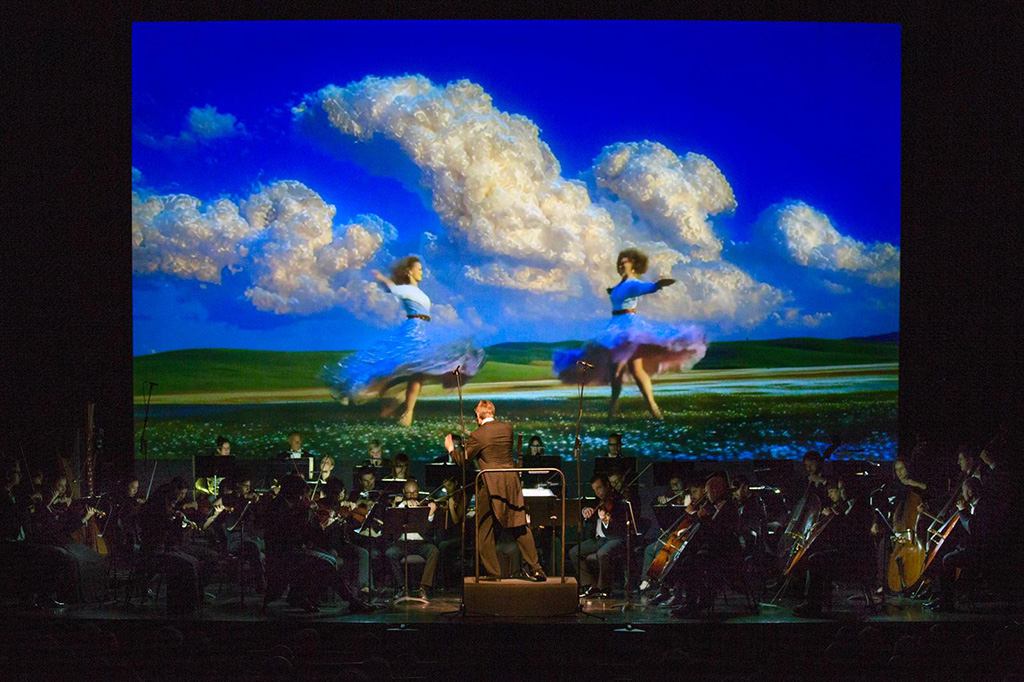
Romanian Folk Dances by Bela Bartok: a structural design.
Béla Bartók was a pioneering 20th-century composer whose originality lies in his profound synthesis of folk traditions and modernist innovation. He created a unique musical style by carefully studying traditional folk dances and songs. He listened, recorded, and analyzed patterns in rhythm, melody, and structure, especially from Eastern Europe. Instead of copying these elements, he transformed them using clear principles such as symmetry, repetition, and variation, building music that is both expressive and highly organized.
His approach can be understood as a simple system that generates complexity. Small musical ideas, like a rhythm or a short motif are developed step by step into larger forms. For performers, this means engaging both the body and the mind: feeling the pulse of the dance while also understanding the structure behind it.
In this way, Bartók’s work is closely related to ideas used in artificial intelligence in music. Like an AI system, he identifies patterns in data, abstracts them, and uses rules to create new variations. His music shows how creativity can emerge from the interaction between collected material, transformation processes, and structured design, bridging human expression and computational thinking.
Béla Bartók reinterpreted through AI.
In a world where the boundaries between artistic disciplines are being reshaped in the light of emerging technologies, a unique project proposes to reconcile musical gesture, visual storytelling, and artificial intelligence in a profoundly renewed experience of live performance.
In collaboration with OOVIE Studio, under the direction of Marco Seco, and featuring Riccardo Acciarino on clarinet, the Seoul Orchestra, joined by Arco, performs Béla Bartók’s renowned Romanian Folk Dances.
At the heart of this proposal lies a simple yet innovative idea: to create a film in real time from a musical performance. As the musicians play, the sound is no longer limited to being heard, it becomes visible. Each performance thus becomes a unique, living, unrepeatable, and intensely expressive work.
Every great musical work contains an imaginary world that composers and musicians express through sound. This performance reveals its hidden intensity through images that come alive in real time, transforming with each recital. OOVIE Studios’ approach follows in the lineage of Fantasia, whose famous motto “music you can see, images you can hear”, poetically captures the essence of this experience.
During the performance, the audience experiences an interactive AI-generated film that evolves in real time according to the musical interpretation. This approach unites art and technology while restoring to the audience the unique and ephemeral value of live performance.
From Sound to Vision
What do we truly see when we listen to music performed on stage? A musician, through talent, discipline, and years of devotion, can shape a symphony that opens a passage into emotion. Moreover, when the orchestra breathes as one, guided by the conductor, a silent language unfolds.
Observing musicians as they play already reveals far more than notes alone. Their gestures, tensions, breaths, and the unity that binds them create a deeply felt experience that transcends the audible. Within us, music awakens inner images, intimate, invisible, and profoundly moving.
What if these inner images could take form?
AI can now generate living imagery directly from sound. Whether performed by a solo musician or a full orchestra, the music remains the source. Each interpretation becomes unique: the same symphony, yet different visions, depending on how it is played, how it is felt.
2026 A world Premiere at the WAIFF in Cannes: Bakalov, Music as the Memory of the World
Bakalov Music as the Memory of the World
Luis Enrique Bacalov was an Italian-Argentinian composer, pianist and conductor celebrated for bringing rare elegance to film music. Blending classical lyricism, tango, and popular influences, he created works of melodic clarity, subtle orchestration, and deep emotional resonance.
His artistic achievement finds its fullest expression in the score for “Il Postino”, a deeply moving and timeless masterpiece, for which he received the Academy Award for Best Original Score.
Set on a quiet Mediterranean island, the film follows Mario, a humble and shy postman assigned to deliver mail to the exiled Chilean poet Pablo Neruda portrayed with elegance by Philippe Noiret. What begins as a simple duty evolves into an unexpected friendship, through which Mario discovers the power of metaphor, language and emotional expression.
Bakalov music accompanies images. A few notes are enough: a guitar barely brushed, strings entering with modest grace and at once, the sea appears, white light, the silence of the islands. This music describes nothing, it makes us feel.
Then, little by little, the music stops accompanying life and enters memories. It returns more distant, slower, the way beloved beings return in flashes, in gentleness, in silence.
When the film ends, it remains within us.
AI, Music, and Cinema: Rhythm as the Emotional Engine of Film
Through the example of “ Il Postino” and the unforgettable score of Luis Bacalov we discover how melody and cadence shape memory, tenderness, longing, and the lived temporality of characters. In Bakalov music, rhythm is not merely musical accompaniment; it structures narrative movement itself: footsteps, bicycle wheels, pauses in speech, the pacing of desire, and the return of silence.
This year at Cannes World AI Film Festival (WAIFF ) a new production inspired by Il Postino will unveil a bold new dialogue between memory, music, and technology.
The music will be performed live by the Seocho Philharmonia and ARKO Ensemble under the direction of Marco Seco[2], with clarinet solo Riccardo Acciarino. Together, they will bring Bacalov’s fragile and luminous themes into a new living form.
The production also features collaborations with AI artist Eugenio Marongiu and the artists of Labyrinth Studio, an exceptional event and a world Premiere.
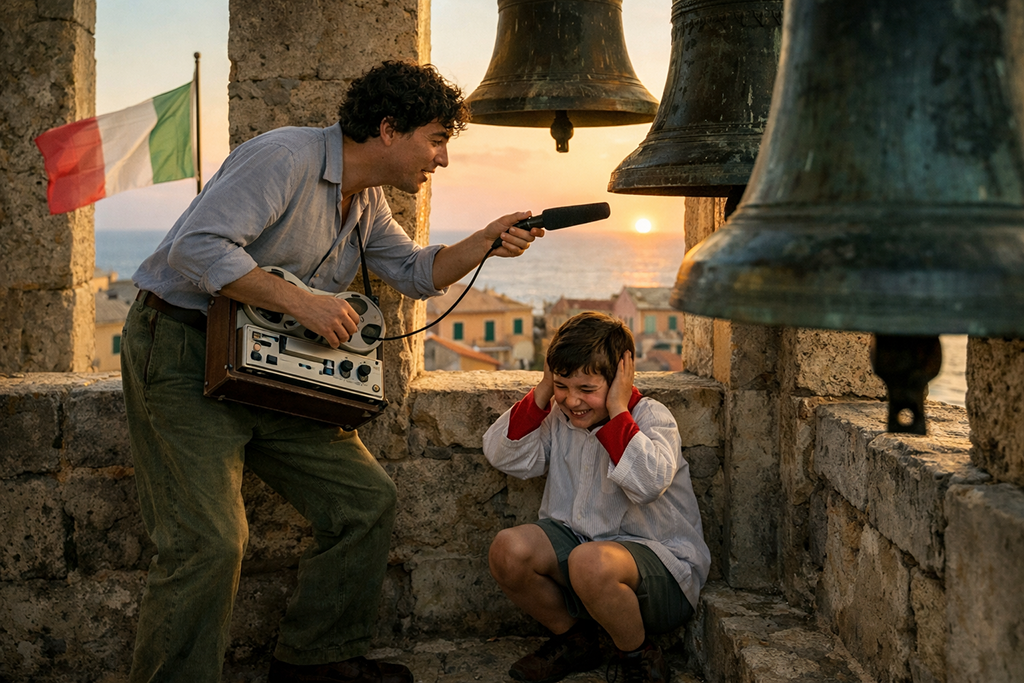
Inspired by Il Postino and the original music of Luis Bacalov “Music Interactive Movie” is an original short-film concept inspired by the same emotional grammar.
Set in the early 2000s on a Mediterranean island, a young woman returns to her childhood home and discovers cassette recordings made decades earlier by her father, a sound engineer who lovingly archived the sonic life of the island, waves, bells, wind, markets, voices, and the heartbeat of his pregnant wife. As she retraces his paths while listening through headphones, past and present begin to merge through rhythm and sound, culminating in a final shared image across time.
This narrative demonstrates that AI can recreate cinematic form, suggest stories, and simulate style, but the emotional truth of cinema still depends on rhythm as embodied memory. Technology may generate images, but music gives them breath. If AI is to serve the future of film, it must learn not only patterns of composition, but the fragile tempos of human feeling.
Conclusions
The integration of artificial intelligence into live music performance represents both a technological breakthrough and an artistic evolution. Musicians engaging with AI express a blend of curiosity and caution. While they are inspired by the novel sonic possibilities AI introduces, concerns about the potential displacement of human roles persist. Yet, within the orchestral context, AI is best understood not as a replacement, but as an instrument that enriches rather than diminishes human creativity.
In movies as artificial intelligence increasingly transforms the processes of cinematic production, writing scripts, generating images, editing scenes and composing soundtracks, it also compels us to reconsider what remains irreducibly human in art.
Ultimately, success for this initiative, particularly within the context of the World AI Film Festival (WAIFF) is defined not solely by technical perfection, but by the creation of a pioneering artistic experience. It is a demonstration of how human creativity, innovation and artificial intelligence can converge on stage to reimagine the future of music and multimedia. At its core, this collaboration affirms that while Artificial Intelligence may expand the boundaries of artistic possibility, it is human vision, sensitivity, and leadership that continue to shape meaning and preserve the emotional depth of the performance.
[1] Interview; Jong Hoon Bae is a Korean American conductor who has performed on prestigious stages such as Carnegie Hall and the Golden Hall of Musikverein. He is also recognized for his innovative work as an artistic director.
[2] Marco Seco is an internationally active conductor known for his expressive style, precision, and versatility across symphonic and contemporary repertoire. He is especially recognized for innovative projects connecting music, cinema, and new technologies.